What Self Care Actually Looks Like When You’re the One Who Carries Everything
SELF CARE GUIDES · REAL TALK
The Unglamorous Truth About Self Care When You Carry Everything
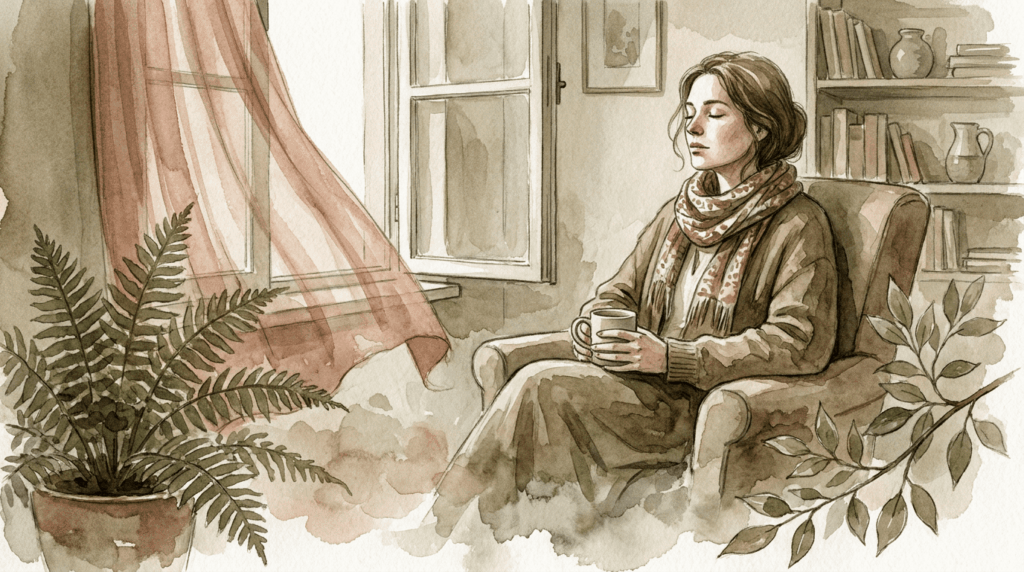
I threw my back out on game day. Here is what self care looked like — and it wasn’t what anyone would put on a Pinterest board.
I woke up yesterday and a shock of pain hit my lower back so hard it nearly brought me to my knees.
Not a gradual ache. Not the kind that builds slowly so you can prepare. The kind that arrives without warning and immediately reorganizes your entire day around its presence.
And my day — my full, already-committed, no-backup-plan day — could not be reorganized.
There was a basketball game an hour away. Two boys who needed breakfast. A house that needed managing. Meals that needed to happen. And me — the only one. The same person who has always been the only one — learning at a young age from my mother that when something needs to be carried, you carry it. No matter what your body is telling you.
So I carried it.
What self care actually looked like that day
Not a bath. Not a journal entry. Not a morning routine from someone who has never had to drive an hour to a basketball game while their lower back screams at them in waves.
This is what self care looked like:
THE TENS UNIT
I clipped it on before we left. Wore it the whole drive there and back. Two hours of electrical pulses interrupting the pain signal just enough to keep me functional. That is self care. Knowing what tool exists and having it ready before you need it.
THE ADVIL WITH BREAKFAST
Not heroically pushing through without help. Taking the help that was available — a small blue pill and a glass of water before I faced the day. That counts.
THE MORNING COFFEE
Because I know my body and I know what it needs to function and that morning it needed warmth and caffeine and something familiar while everything else felt wrong.
THE ICE PACKS FOR THE DRIVE HOME
I thought ahead. In the middle of managing everything else, some part of my brain said — you will need these. I listened. That is self-awareness functioning as self care.
LETTING MY BOYS CARRY WHAT THEY COULD
Years ago I started teaching them what to do when mom is in pain. They know where the heating pad is. They know how to take the dry laundry out. They can get their own showers, get themselves dressed, feed the dog, water the plants. I built that infrastructure quietly over time — not because I wanted to need it but because some part of me knew I would. That is self care too. The kind you build before the crisis arrives.
ACCEPTING MY MOM WITHOUT ASKING
She showed up with things for movie night — the thing I had promised the boys and was not going to be able to pull off alone that night. She didn’t wait for me to ask because she knew I wouldn’t. And I let her help without apologizing for needing it. That is something I am still learning. It is harder than it sounds when you have spent your whole life being the one who handles things.
Self care on the hardest days is not restoration. It is triage. It is identifying what you need to keep going and finding the smallest possible version of it that is actually available to you right now.
What I felt when I finally got home
Thank God I’m home.
That was the first thought. Not relief exactly — more like the exhale your body has been holding for twelve hours finally releasing. The permission to feel every ache that had been waiting patiently behind the day’s demands.
I changed into whatever I wanted. I stopped performing okay. I let myself exist in the pain instead of managing it for an audience.
And in that quiet I had a thought I wasn’t expecting:
Why have I been built to suck it up and deal with the hardest things in my life all of the time?
Not bitterly. Not with self-pity. Just honestly. Like a question that had been waiting a long time to be asked out loud.
Because the answer is complicated. I was built this way partly by a mother who modeled carrying the load without complaint. Partly by a father whose own suffering made him believe that suffering is simply what life requires — and that struggle is the only proof of survival. Partly by circumstances that left me as the only one standing between my children and an unmanaged life.
I was built this way. And I am also, slowly, choosing to be built differently.
There is a silent pain in being the strong one. Not because strength is wrong — but because strength without support is just another word for alone. And behind our doors, so many of us are carrying things that the people who love us cannot fully see. Or will not fully see. Or do not know how to see.
If you’re carrying more than anyone sees — the free HerAfter guide was written for exactly this. Five chapters on what self-abandonment really is and how to begin coming back to yourself. Get Don’t Leave Yourself Behind →
I am writing this the day after. My back is still not right. The boys are fed and the house is managed and I am here — writing this because it felt like the truest thing I could do with what yesterday was.
What does self care actually look like for you on your hardest days? Not the version you wish it looked like — the real version. The thing you do just to keep going. I want to know. I think we all need to hear each other’s real answers.
And if someone in your life needs to read this today — you don’t have to explain why you’re sending it. Sometimes that’s enough.