Signs You Lost Yourself in Motherhood — And Why It’s So Hard to See
MOTHERHOOD & IDENTITY
Signs You Lost Yourself in Motherhood — And Why It’s So Hard to See
It doesn’t arrive with a breakdown. It arrives quietly, disguised as routine.
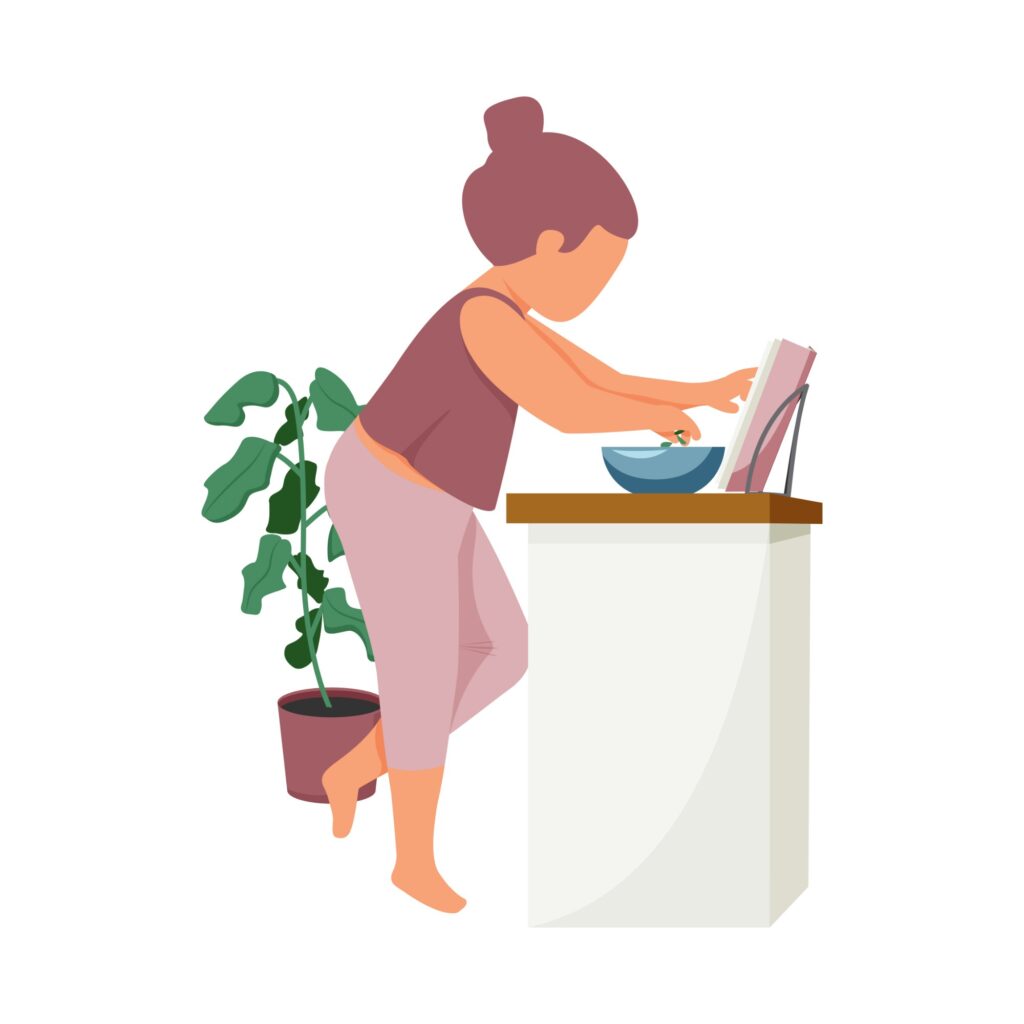
Illustration by Magnific AI.
The signs you’ve lost yourself in motherhood are rarely dramatic, which is exactly why so many women don’t recognize them until years later. Nobody tells you that losing yourself doesn’t feel like losing something. It feels like functioning — like getting through the day. Most of the time it feels like absolutely nothing at all.
That’s what makes it so hard to name. We expect losing ourselves to feel dramatic — a moment of collapse, a clear before and after. What losing yourself in motherhood actually looks like is far quieter than anyone prepares you for. But for most of us it happens the way a photo fades in sunlight. Slowly. Imperceptibly. Until one day you look up and realize the color is gone and you can’t remember exactly when it left.
I’ve been thinking a lot about what that actually looks like in the everyday — not the crisis version, but the quiet, invisible version that lives inside the ordinary Tuesday. The one that hides inside the things you’ve learned to do without thinking.
Losing yourself in motherhood doesn’t feel like a loss. It feels like efficiency. It feels like being good at this. Until it doesn’t.
Because that’s the thing nobody says out loud: the disappearing happens inside the doing. Inside the routine. Inside all the ways you’ve learned to carry your life without having to think about it anymore.
· · ·
If you’re wondering what the signs you’ve lost yourself in motherhood actually look like, they often appear in ordinary moments like these. Not the version from the outside — the version from inside your own body, your own days, your own quiet.
Signs You’ve Lost Yourself in Motherhood: What It Actually Looks Like Day to Day
You do the dishes and your mind goes completely blank
Not peaceful blank. Just — absent. You’ve washed these dishes so many times that your hands know what to do without you. And somewhere in that automaticity, you stopped being present for your own life. You’re there. But you’re not there. And the scary part is you’ve stopped noticing the difference.
You move through your roles without ever stepping into yourself
You make the appointment. The drive happens automatically. You remember the permission slip, the practice schedule, the pediatrician’s name, the last time they had a fever. You carry the invisible load of an entire household in your head, and you do it so seamlessly that no one — including you — stops to ask how much that costs. You’ve become so good at the roles that the person inside them has gone quiet.
The drive to practice is automatic and your mind drifts somewhere formless
You know the route. You’ve driven it a hundred times. Your hands are on the wheel but your mind is — where exactly? Not anywhere specific. Just floating. Not resting, not thinking, just existing in a kind of low-grade absence that has become so familiar you’ve mistaken it for peace. It’s not peace. It’s disconnection. And it lives so quietly you’ve stopped questioning it.
You stay in motion because stopping feels dangerous
If you slow down, something catches up with you. You don’t know exactly what — just that the busyness serves a purpose beyond the tasks themselves. Motion feels like proof that you’re okay. Like you’re doing enough. Like you exist beyond the thing you can’t quite name that sits at the bottom of everything. So you keep moving, adding another task, pushing the quiet down a little further and calling it productivity.
And underneath all of it — you want to be seen. The words for what you want people to see won’t come. You want to matter beyond what you do. You want to be seen but can’t find the words for what you want people to see.
There is a hunger underneath the surface of your days — not for attention exactly, but for recognition. For someone to look at you and see not the mother, not the function, but the person. The actual you. The one with desires and frustrations and a rich inner life that hasn’t had an audience in years. You want to matter beyond what you do. You want your existence to mean something that isn’t measured in what you provide. But the wanting feels selfish and so you push it down too.
You can’t remember what you actually enjoy
Not what you used to enjoy before kids — you’ve made peace with the fact that things change. But right now, today, if someone gave you a free afternoon and told you to do something just for yourself — what would you do? If the answer doesn’t come quickly, or if it’s something that feels guilty before it even feels good, that’s worth sitting with. The woman who knew what she liked is still in there. She’s just been waiting quietly for someone to ask.
If any of this is finding you somewhere real — you can stay connected here. New posts and honest resources for moms rebuilding themselves, delivered quietly. Join the list →
· · ·
Why These Signs You’ve Lost Yourself in Motherhood Matter
Most women who have lost themselves in motherhood don’t realize it until something finally cracks open. Here is what I want you to know, and I mean this in the most unglamorous, un-inspirational-poster way possible: what you’re feeling is not a character flaw. Not ingratitude. Not weakness.
This is what happens when a person spends years giving their full attention to everything and everyone except themselves. The culture that measures a mother’s worth in her output never stops to ask who she is when the output stops. That’s not a personal failure. That’s a system that was never designed with her in mind.
There Is a Name for What You’re Feeling
There is a word for the identity shift that happens when you become a mother — matrescence. It’s as significant a transformation as adolescence, and yet we treat it like a footnote. Like something you’re supposed to just absorb and move on from. Many women describe this season as losing their identity after becoming a mom, even though what they’re experiencing is a normal developmental transition. It’s as significant a transformation as adolescence, and yet we treat it like a footnote. Like something you’re supposed to just absorb and move on from. Most of us never got the language for it. Most of us were handed a baby and expected to figure out who we were now without any map.
You didn’t lose yourself because you failed at motherhood. You lost yourself because you were never given permission to keep yourself while doing it.
This is where the work begins. Not with a dramatic overhaul. Not with quitting everything and running away. But with the small, uncomfortable act of noticing. Of paying attention to the places where you’ve gone quiet inside your own life. Of asking — gently, without judgment — when did I stop being here?
She Didn’t Leave. She’s Been Waiting
Finding yourself again after losing yourself in motherhood doesn’t require a dramatic overhaul or a perfect plan. Because she’s still there. The version of you that has opinions and desires and a specific way she likes her coffee and things that make her laugh and things she’s still angry about and dreams she hasn’t spoken out loud in years. She didn’t leave. She just learned to wait.
And she’s been waiting long enough.
If you recognized yourself in any of these signs you’ve lost yourself in motherhood, recognition is the beginning of reconnecting with yourself. You don’t have to know what yet. You just have to be willing to keep looking.
Which one of these signs hit closest to home for you? You don’t have to explain it. Just name it if you can. I’m reading every single one.
If this resonated and you want to be here for what comes next — the next part of my story, more posts like this one, and eventually a space where we can do this work together — you can join the list below. No noise. Just the next thing when it’s ready.
And if someone in your life needs to read this today — send it. You don’t need to explain why.