What I Learned About Myself Watching My Boys Lose a Game
REINVENTING SELF · SOLO MOM LIFE
What I Learned About Myself Watching My Boys Lose a Game
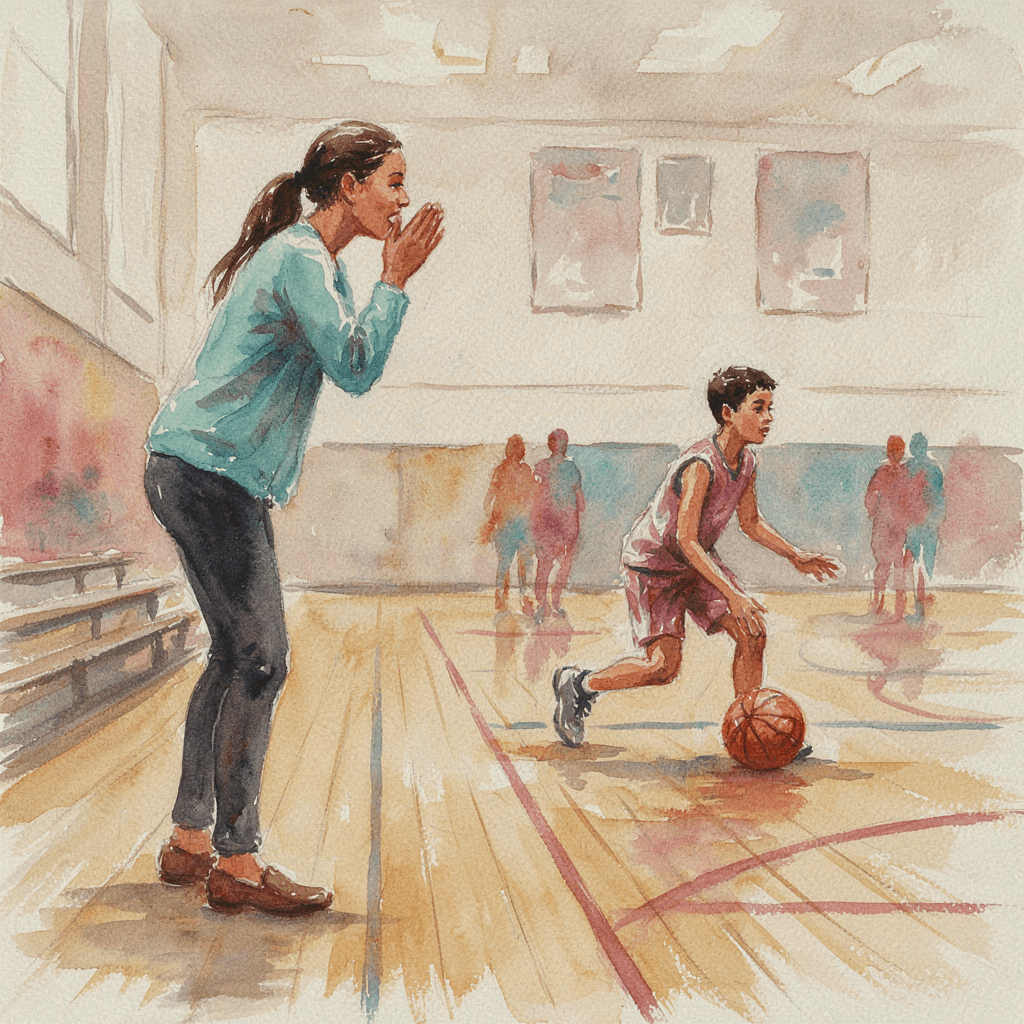
On holding your fear in the bleachers, raising resilient kids while healing your own, and the moment something shifted in me that I wasn’t expecting.
On the way to the game, I was already managing worst case scenarios in my head. Two back-to-back games we had never played before. A league I only knew from what I’d read online. And my two boys — sensitive, intelligent, strong-willed — about to walk into something I couldn’t fully prepare them for.
I sat in those bleachers holding everything I couldn’t say out loud. The fear that they’d get hurt. The worry that it would be too much. The quiet dread of watching them struggle and not being able to fix it. I have been doing this their entire lives — holding the weight of every possible outcome inside myself so they don’t have to carry it. Like a pot of water on a low flame. Slow boiling. Never quite spilling over. But always right there.
What I didn’t prepare for was what happened on the way home.
The game nobody warned me about
They were matched against sixth graders. My boys are in fourth grade. The size difference alone made something rise up in me that I had to actively talk back down. I sat there watching kids nearly two years older — taller, stronger, faster — and I felt something close to outrage on their behalf. How could this be allowed? How could anyone call this a fair game? How could the older kids even feel like they had really earned anything?
I kept my face calm. I cheered. I did not let them see what was happening inside me.
Because I grew up with a competitive father. And I know what it feels like to absorb someone else’s disappointment in your performance. I know what it does to a child when the adult in the stands cannot separate their own emotional investment from what the child actually needs in that moment. I learned early that winning mattered — and losing said something about you.
I have spent years trying to unlearn that.
I did not want to give my boys my fear. I did not want them to inherit my relationship with failure — the one that was handed to me before I was old enough to question it.
What they taught me on the way home
They lost. It wasn’t close. And I braced myself in the car for what I had mentally prepared for — the tears, the hurt, the deflation, the defeat I was already rehearsing how to address.
What I got instead was: exhausted boys who were hungry and who said — with complete sincerity — that they didn’t really care about the loss.
Not in a defeated way. Not in the way of children who have learned to suppress their feelings to protect someone else. In the way of children who had actually played hard, given what they had, and were genuinely at peace with the outcome.
Something shifted in me that I don’t have a clean word for yet. A kind of awe. At them. At who they already are that I had nothing to do with. And quietly — at myself. Because somewhere between the fear I carried into that gym and the drive home, I had managed not to give it to them. I had held it. Processed it. Kept it mine instead of making it theirs.
They are more resilient than I imagined. And I am more capable of holding my own fear than I give myself credit for.
What I'm learning about parenting while healing
I am learning that my job on the sidelines is not to protect them from hard things. It is to be present for hard things — visibly calm on the outside, processing quietly on the inside, and available after. Not to fix what happened but to help them find their own language for it.
We talked about the game without emotional weight. We talked about what they noticed in their bodies — where they felt tired, when they felt frustrated, what they did with that feeling. I am trying to give them tools for self-awareness that nobody gave me. The ability to identify what is happening inside them before it takes over. To make mistakes and look for the lesson instead of the shame.
I also coach them at home now. Drills in the driveway. But I make games out of the drills because I want them to remember that hard work can still feel like play. That commitment to something difficult doesn’t have to cost you the joy of the thing itself.
I check in regularly — do you still love this? Not because I need them to love it. But because I need them to know that their enjoyment matters more than the outcome. That I am not invested in their success the way my father was invested in mine. That this is theirs — not mine to live through them.
Some weeks that is easier than others. Some games I am calmer than others. But I am showing up — for them and for the version of myself that is still learning how to do this without the blueprint I was given.
That loss last weekend built something in them I couldn’t have manufactured. And it built something in me too. A small proof that the patterns I inherited are not the patterns I have to pass forward.
That is worth more than any win.
I am writing this from inside the process — not from the other side of it. Some weeks I hold it well. Some weeks the pot nearly boils over and I have to catch myself.
If you’re raising children while doing your own healing work — what is the hardest pattern to break? The one you catch yourself repeating and have to consciously choose differently? I’d love to know I’m not the only one still figuring this out.
And if this found someone who needed it today — send it. You don’t have to explain why.
[Get the free HerAfter guide — Don’t Leave Yourself Behind →]