What Is Matrescence — The Identity Shift Nobody Warned You About
REINVENTING SELF· PILLAR 1
What Is Matrescence — The Identity Shift Nobody Warned You About
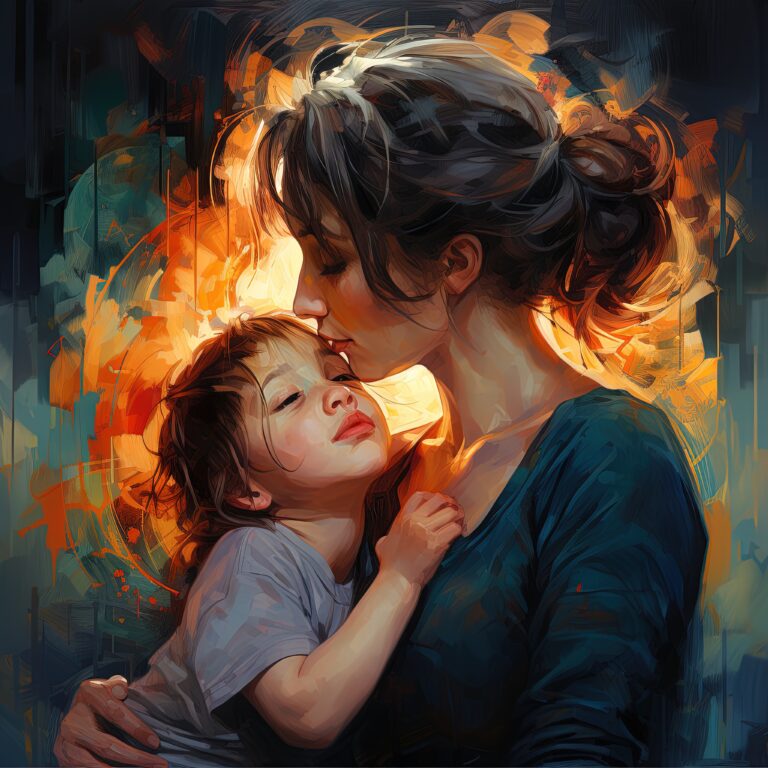
You became a mother and lost yourself in the process. There is a name for what happened to you — and knowing it changes everything.
I left the hospital with two babies and no idea who I was becoming. I only knew one thing with absolute certainty — I was completely on my own, and they were counting on me for everything.
What followed was not what anyone had prepared me for. Not the books, not the prenatal visits, not the well-meaning advice from people who loved me. Nobody warned me about what becoming a mother would do to my sense of self. Nobody gave me language for the slow, quiet unraveling that was about to happen alongside the love.
I found the word matrescence years later. And when I did, something in me exhaled for the first time in a long time. Because it named something I had been living without being able to call it anything at all.
What matrescence actually is
Matrescence is the developmental process of becoming a mother — the complete neurological, hormonal, psychological, and identity transformation that happens when a woman transitions into motherhood. The term was first coined by anthropologist Dana Raphael in the 1970s and later expanded by developmental psychologist Aurelie Athan, who has spent her career arguing that matrescence deserves the same recognition as adolescence.
Just as adolescence marks a profound biological and psychological shift from child to adult — complete with identity confusion, emotional upheaval, and a complete reorganization of the self — matrescence marks an equally profound shift from woman to mother. The brain actually changes. The nervous system reorganizes. The sense of self is fundamentally altered.
And yet we treat it like a footnote. Like something you’re supposed to absorb over a weekend and move on from.
We prepare women for the physical reality of birth in extraordinary detail. We give them almost nothing for the identity reality of what comes after. The cultural expectation is that you will simply become a mother and carry on — grateful, capable, and essentially unchanged at the core.
That expectation is a lie. And it costs women enormously.
What matrescence looked like from the inside of my life
In the early years my nervous system was in a permanent state of high alert. I was waking before the babies cried, listening for every sound, running through worst-case scenarios before my feet hit the floor. I was a nurse — trained to anticipate danger, trained to stay one step ahead of crisis — and I brought all of that vigilance home and turned it on my children and myself.
The chronic stress wasn’t weakness. It was my brain reorganizing itself around the most important job it had ever been given. But nobody told me that. So I just experienced it as exhaustion that never fully lifted, worry that felt disproportionate to the moment, and a slow erosion of confidence in myself that I couldn’t explain.
I had gone into preservation mode — like a cheetah with her babies. Every instinct I had was pointed outward. Toward them. Toward their survival, their safety, their needs. And somewhere in that fierce outward orientation, I disappeared from my own life without noticing.
I was confused about health decisions. About which school was right. About how to raise boys toward independence without hovering so much that I created dependence. I lost sleep over details that felt enormous in the middle of the night and manageable in daylight. I slowly stopped trusting my own instincts — the very instincts that were actually keeping my children safe.
And I carried something extra that I didn’t talk about much. The quiet weight of knowing their father wasn’t present the way they deserved. I felt responsible for filling that space — knowing I couldn’t do it effectively, doing it anyway, and absorbing the guilt of the gap between what I could give and what I wished I could give.
One day my mother offered to watch the boys so I could do something for myself. And I stood there — completely still — unable to answer. Not because I didn’t need the break. But because I genuinely didn’t know what I would do with it. I couldn’t remember what I enjoyed. I couldn’t locate the version of me that had desires and preferences and things she looked forward to.
It felt like I had blacked out for six years.
That is matrescence. Not a breakdown. Not ingratitude. Not a failure of love. It is what happens when a woman pours herself entirely into becoming a mother and receives no language, no framework, and no permission to acknowledge what that transformation actually cost her.
Why it matters that you know this now
Because naming it changes everything.
When you don’t have language for what is happening to you, you fill the silence with the worst possible explanations. You tell yourself you are not cut out for this. That other mothers are handling it better. That something is fundamentally wrong with you for struggling with something that is supposed to be the most natural thing in the world.
Matrescence says: none of that is true. What you are experiencing is a developmental passage — as significant and as disorienting as any other major identity transition in your life. It is supposed to be hard. The confusion is not a sign that you are failing. It is a sign that you are changing.
And here is the part that nobody tells you about the other side of it:
Women who move through matrescence consciously — who grieve what was lost, who integrate the old self with the new, who stop performing the version of motherhood that was handed to them and start building one that actually fits — often describe the period that follows as the most powerful season of their lives. Not because they have it figured out. But because they finally know themselves well enough to stop abandoning themselves for everyone else.
That is what this blog is about. That is what the guide is about. That is what I am working toward in real time — not from the other side of it, but from inside the middle of it, the same place most of you are reading from.
You are not broken. You are in the middle of one of the most significant transformations a human being can go through. And you deserve language for it — and a space where someone is walking alongside you while you find your way through.
That space is here.
I want to ask you something that I didn’t have anyone ask me for years:
When did you first realize that becoming a mother had changed who you were — not just your schedule or your priorities, but you, at the core? Did you have language for it? Or did you just live it quietly, the way most of us do?
Leave it in the comments if you’re willing. I read every one. And if this post found someone who needed it today — share it. You don’t have to explain why.
And if you want to go deeper — the free HerAfter guide walks through five ways self-abandonment takes root after motherhood and how to begin coming back to yourself. It was written from inside this exact season.